
Female Archetypes (2020 - ongoing)
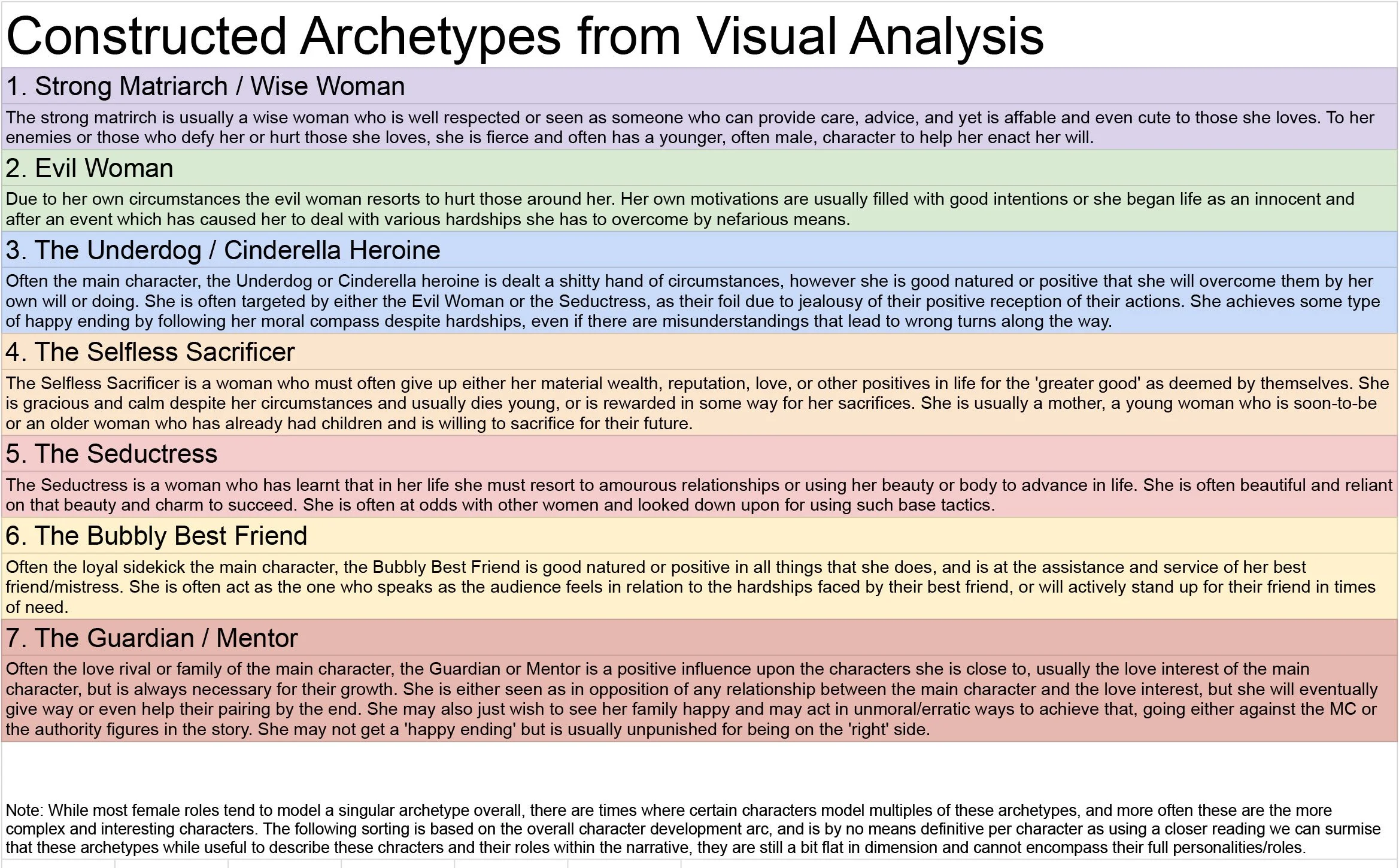
The ongoing research project into Female Archetypes began as Lizzie started her Masters at the Goldsmith’s programme at LASALLE College of the Arts in Singapore. Modelling roles played on the silver screen as a means of understanding what it is to belong and identify with cultures she has links to, was an exploration into the visual media landscape of southeast and east Asia. This project began with an extensive visual analysis of female characters from 66 pieces of media from 11 different countries and regions, and resulted in original archetypes coded from the research. The art projects that stemmed from this research are below.
Abstract from Exegesis
Questioning the Mirror
Re-Imagining the Southeast Asian Female Archetype through Performative Video
This practice-based research project seeks to investigate the concept of belonging as a means of understanding how one ‘belongs’ in a given place when one is unsure about identity, and unable to define ‘home’. Instead of asking where does one belong, the project proposes the question: how could one belong? Over three semesters, a combination of various autoethnographic and phenomenological methods, such as surveying, watching, reflecting, writing, performing for the camera, and editing is used to devise a working model or systematic process to work creatively through uncertainty about identity. It proposes that, rather than simply watching or consuming media one relates to, one could create, write, and use performance to work through it. The medium of performative video is thus shown to be a way of understanding belonging, through self-reflection and demonstration. In making the final work, Homecoming, as two video pieces which cycle and give greater context to each other, the artist Lizzie Wee questions if she is looking for belonging or acceptance from others or ultimately, from herself.
Homecoming (2020-2021)
homecoming
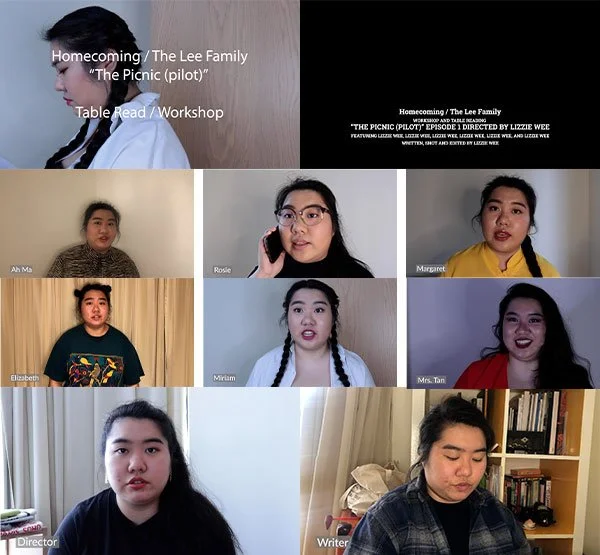
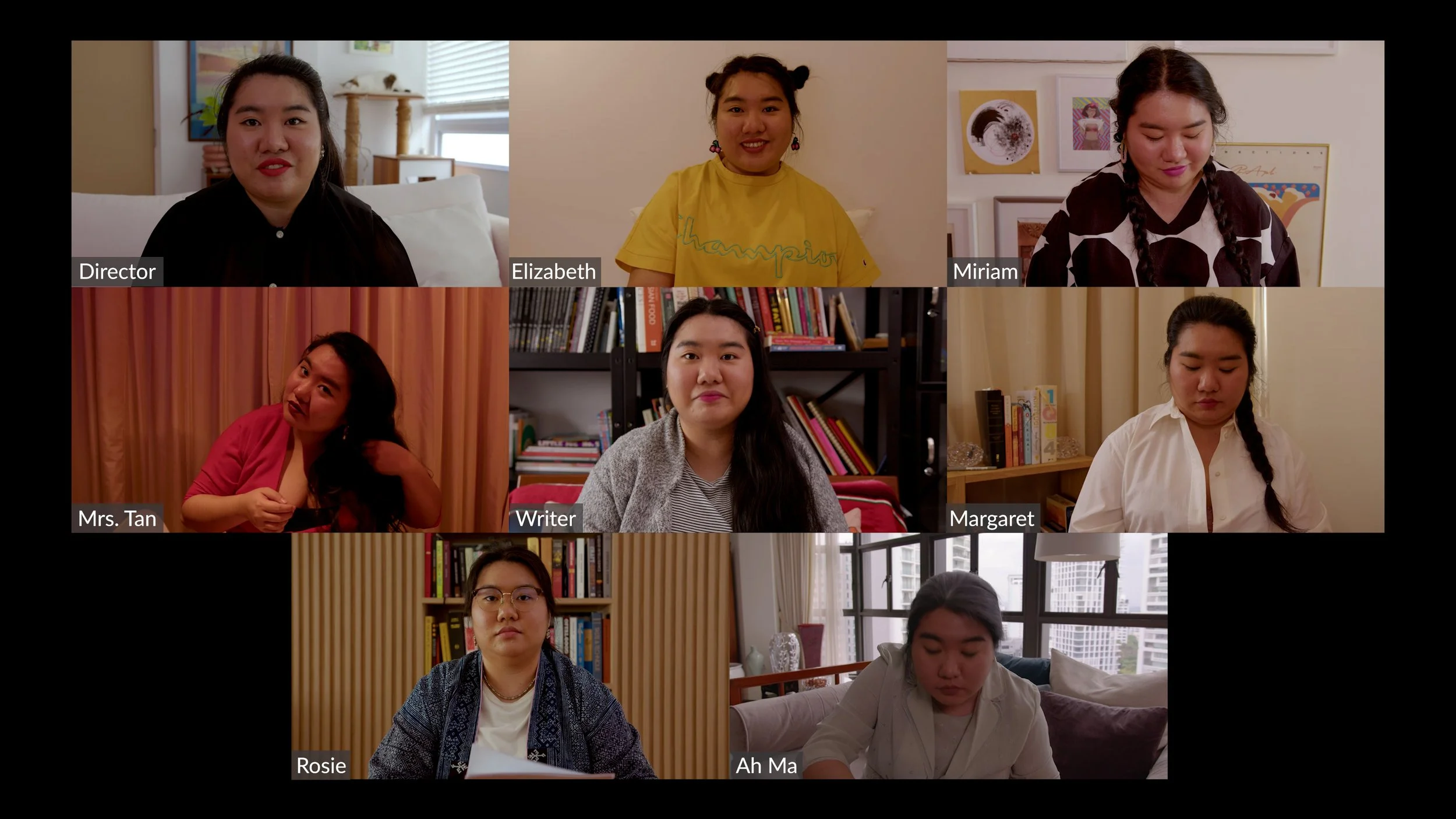
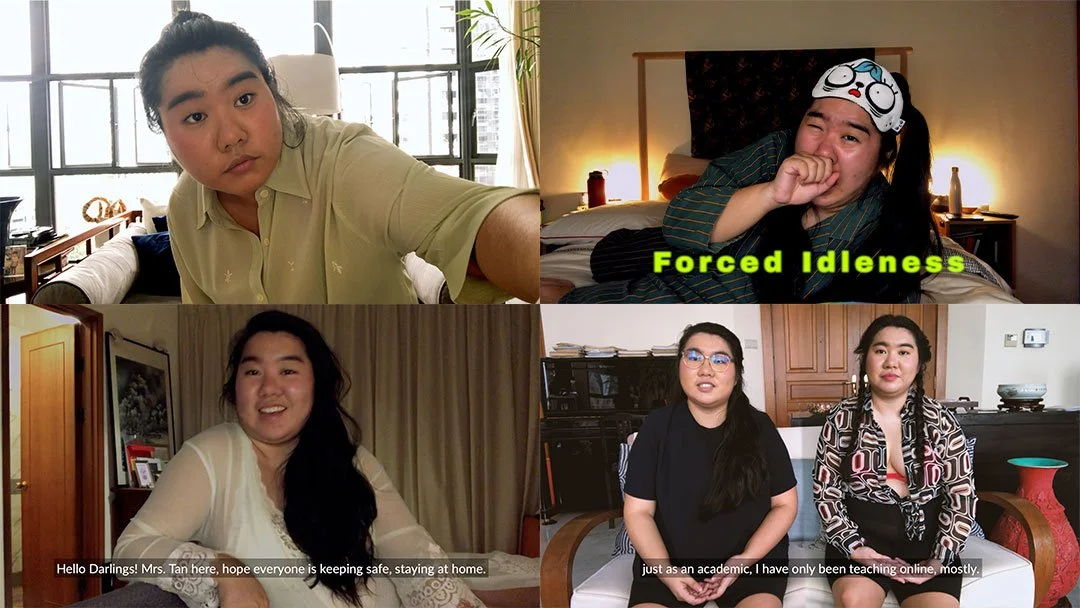
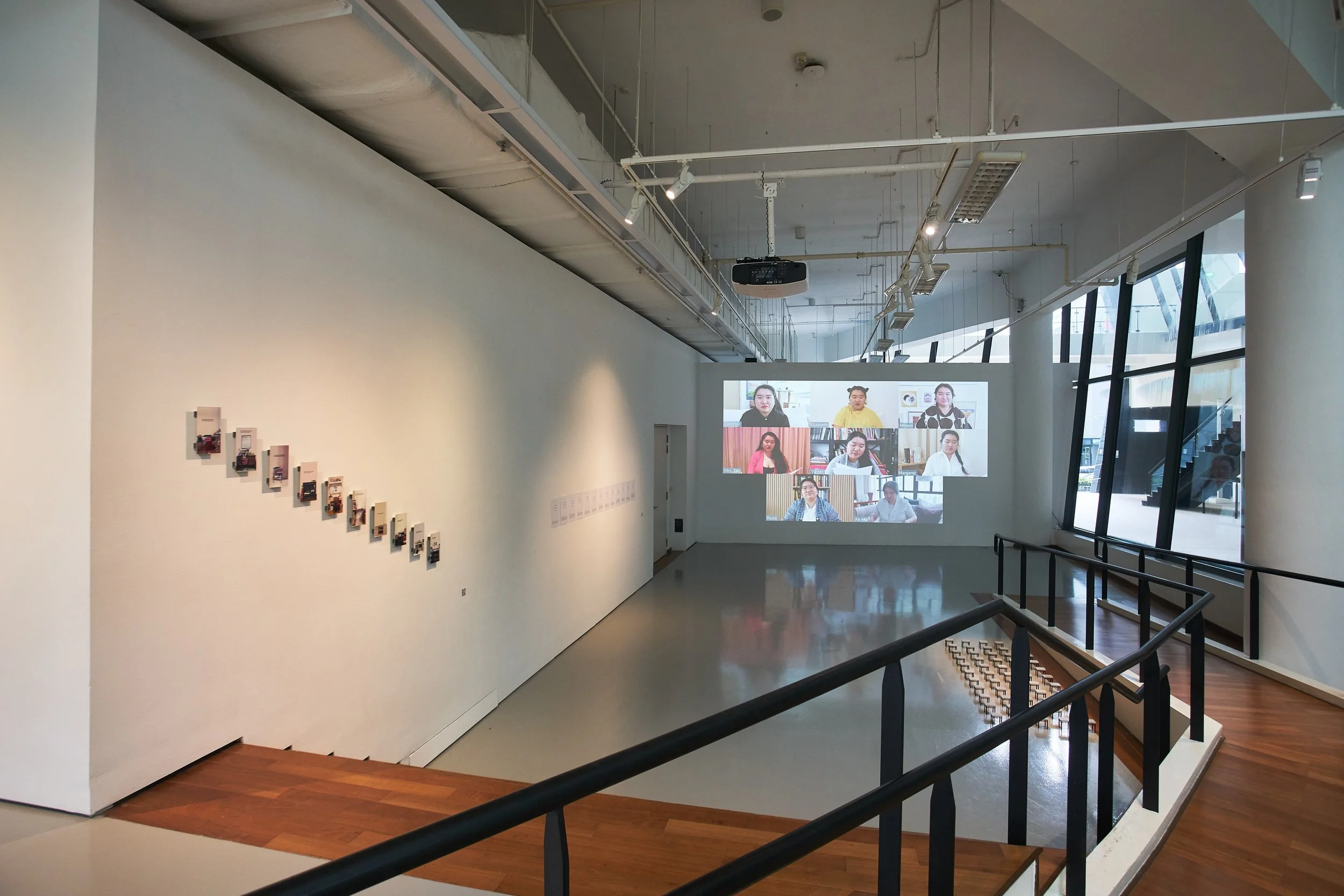
Derived from her Master’s research on female representation in Southeast and East Asian film and television, the Homecoming project was a series of performative videos which depicted the fictional narrative of the cast and crew of an imagined television series. This project began with an extensive visual analysis of female characters from 66 pieces of media from 11 different countries and regions, and resulted in original archetypes coded from the research. By simultaneously writing a script and making video sketches to explore the characters crafted from the research, Lizzie created two works: Homecoming/The Lee Family - The Picnic (pilot) (2020) and Forced Idleness (2021). The script came from the idea of re-imagining one of the shows researched, a local sitcom, Phua Chu Kang Pte. Ltd. but making the cast totally female, and filter it through her own lived experiences, and model the characters after the constructed archetypes. The final works presented for her graduation showcase were Homecoming - The Conversations (2021), and Homecoming - The Table Read (2021). These works were the beginning of her interest and research into the roles that women play both in front of and behind the camera. It was the beginning of the development of an ethnographic/phenomenological methodology to produce artworks which deal with vast amounts of data and research, then refining it into a more accessible work of art.
Bubbly Best Friend Explained (2020)
Bubbly Best Friend explained
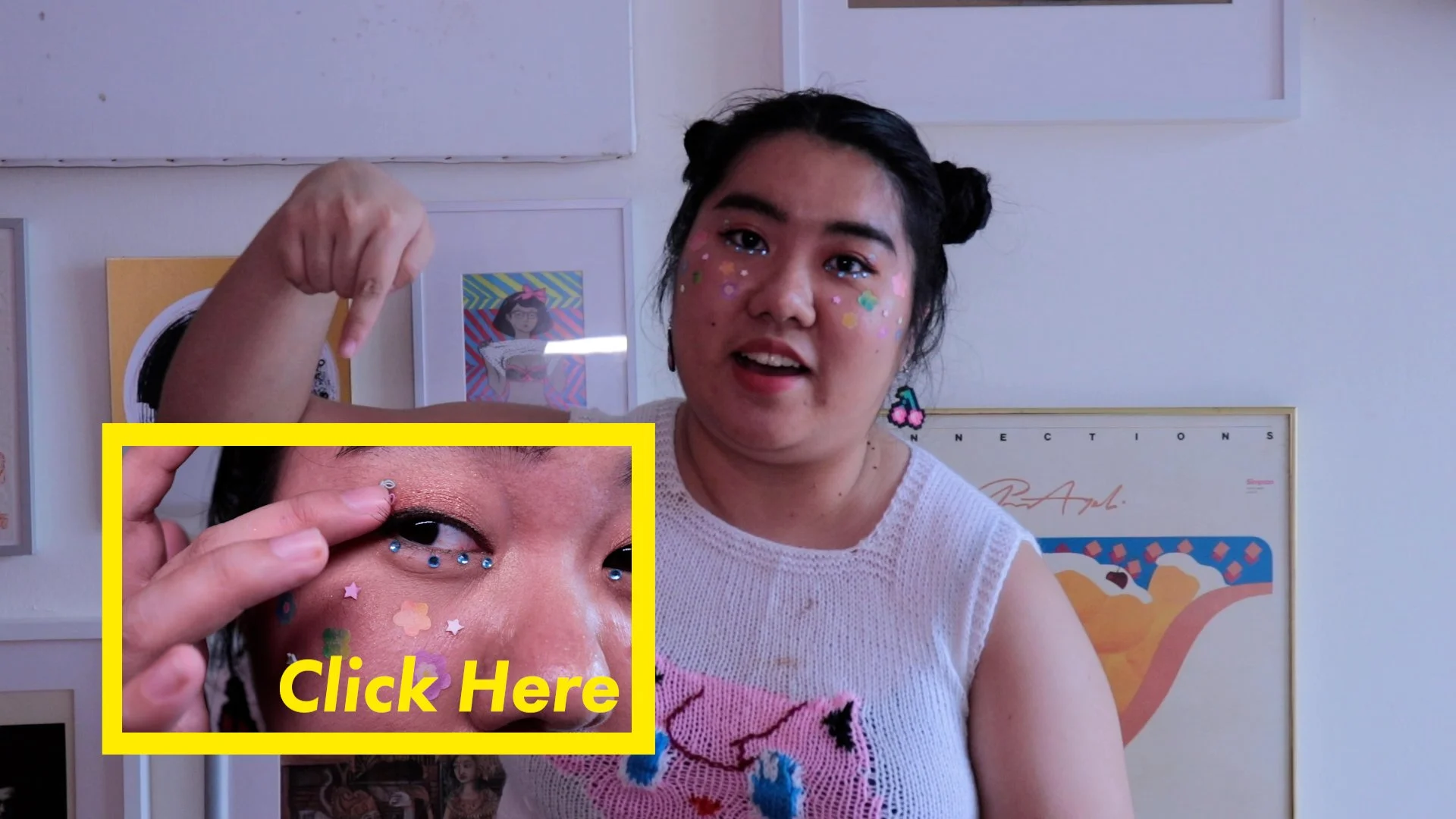
The Bubbly Best Friend is an archetype of a traditional female sidekick. She is bubbly and cheerfully helps the main character with all she has. This work shows the artist embody this archetype as an explainer for her masters research - a very meta video in the style of a fictional seasoned YouTuber character. The character performs for the camera and explains in depth on the Bubbly Best Friend archetype.
Honey Trap (2022)

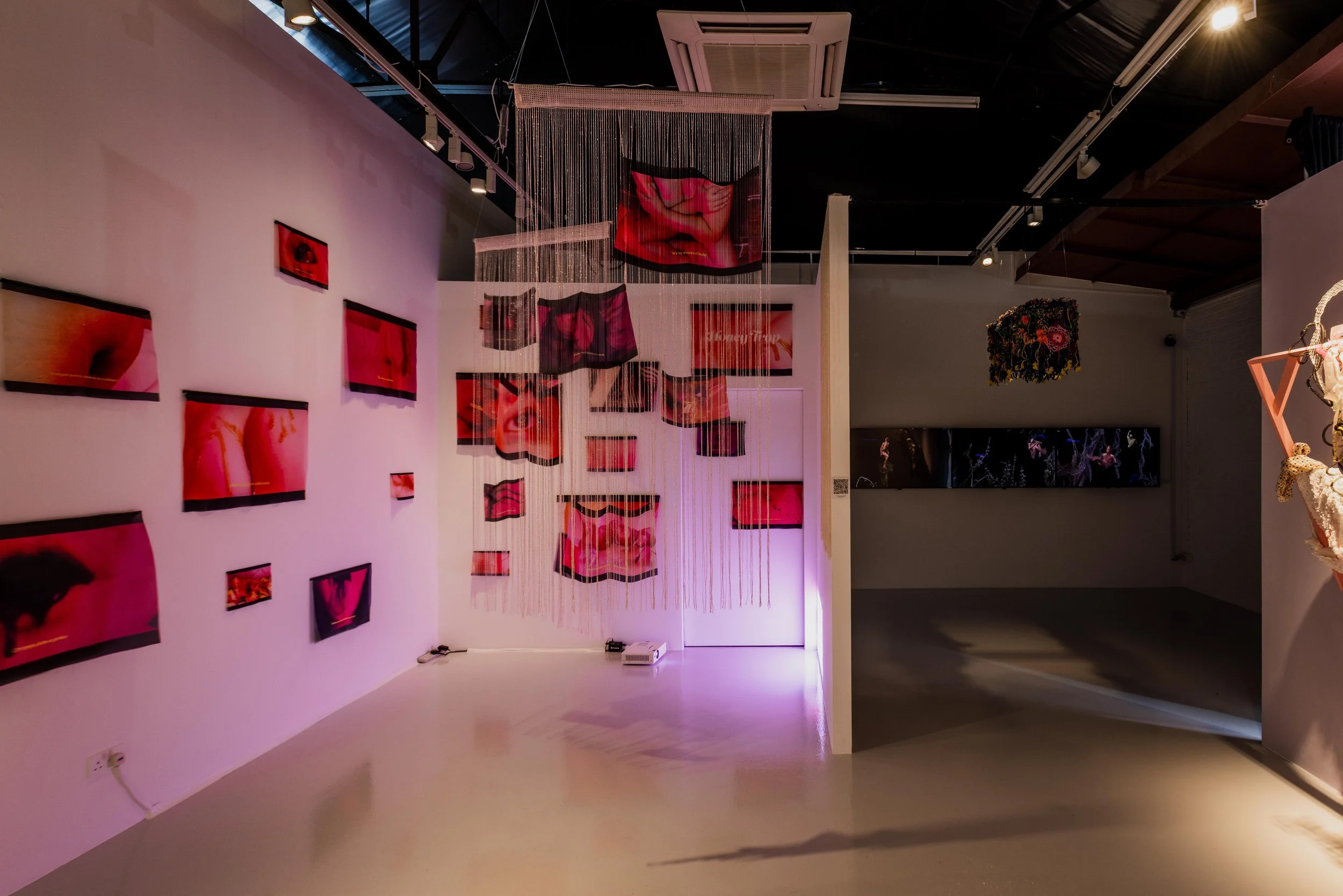
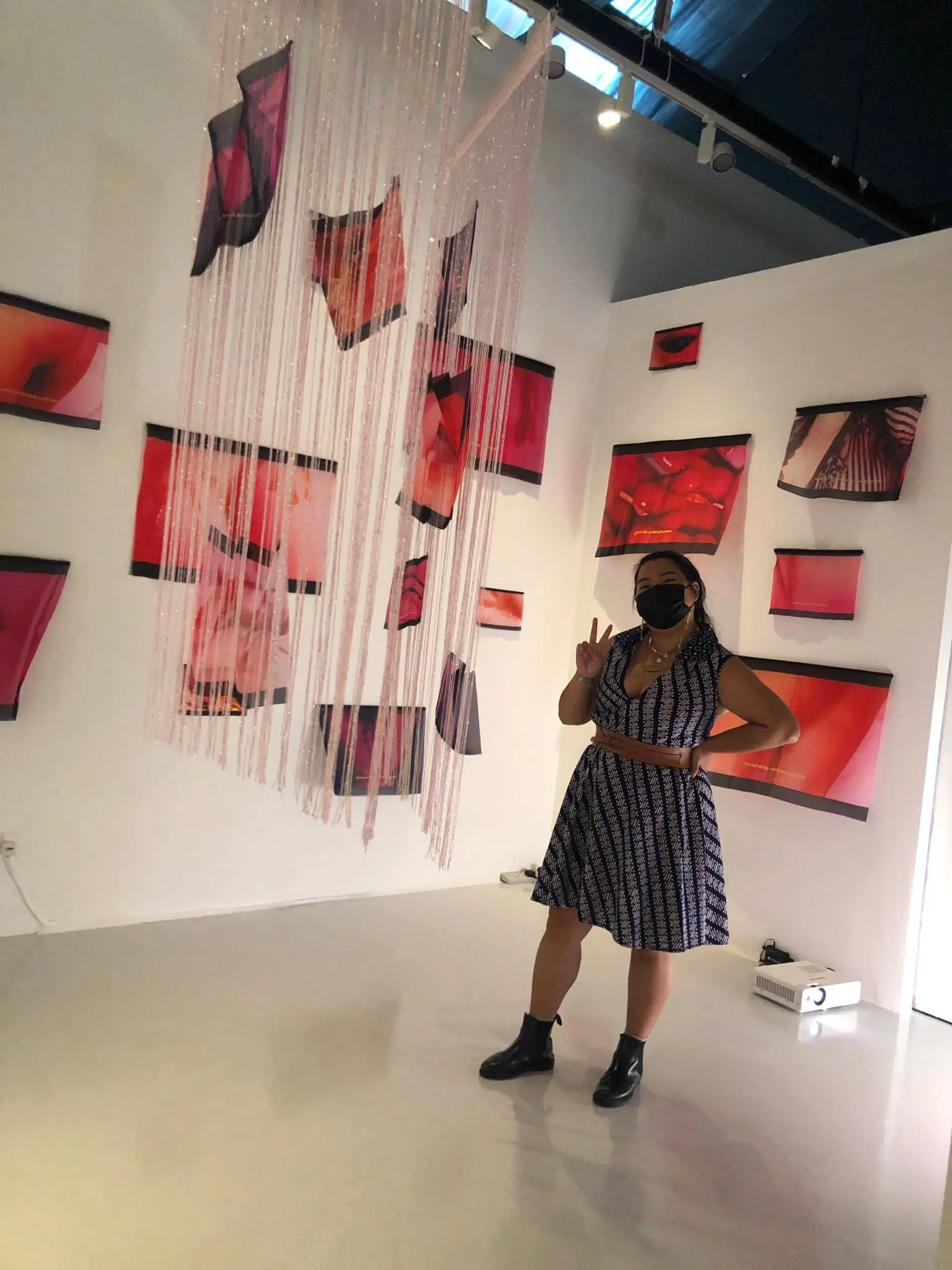
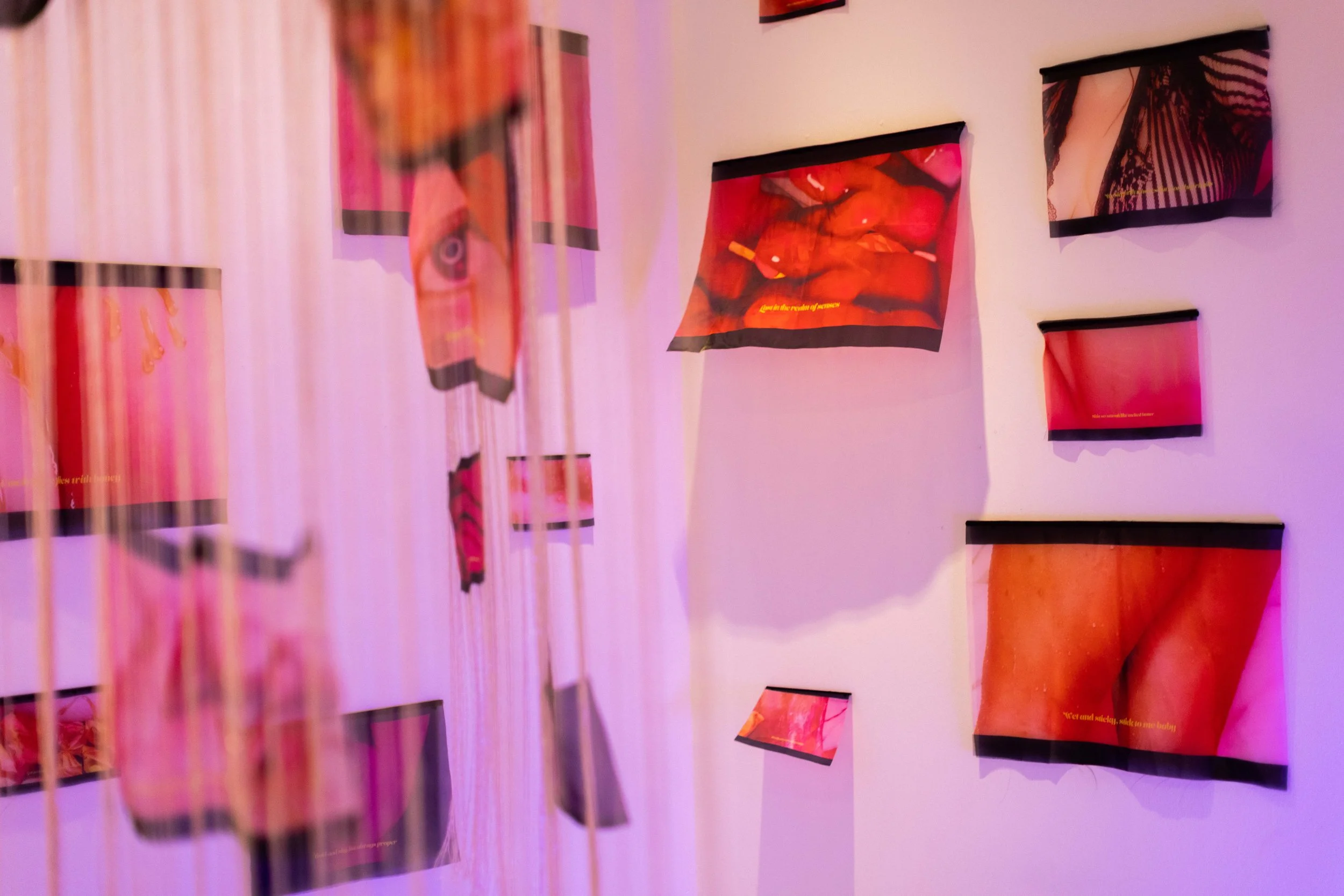
Honey trap
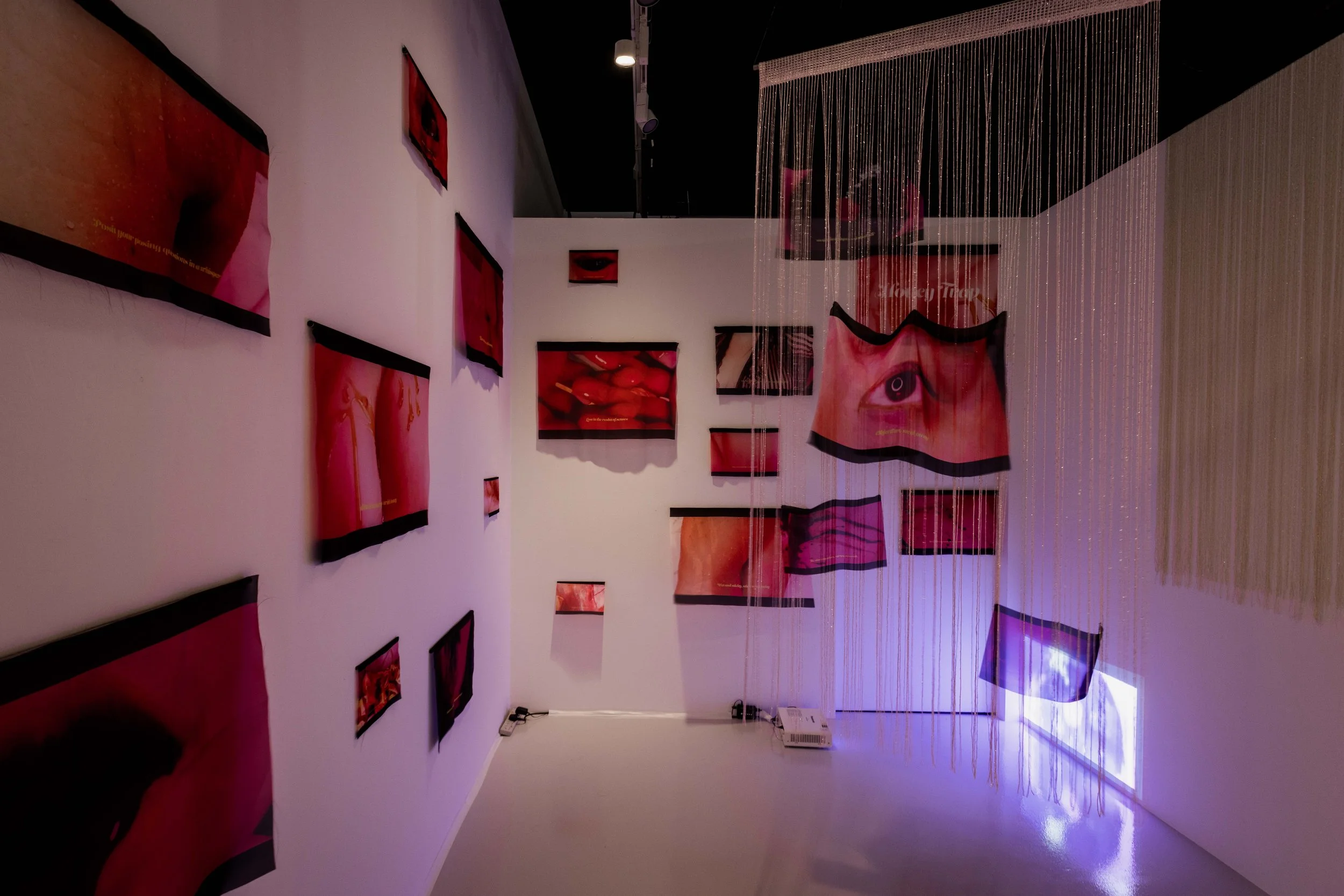
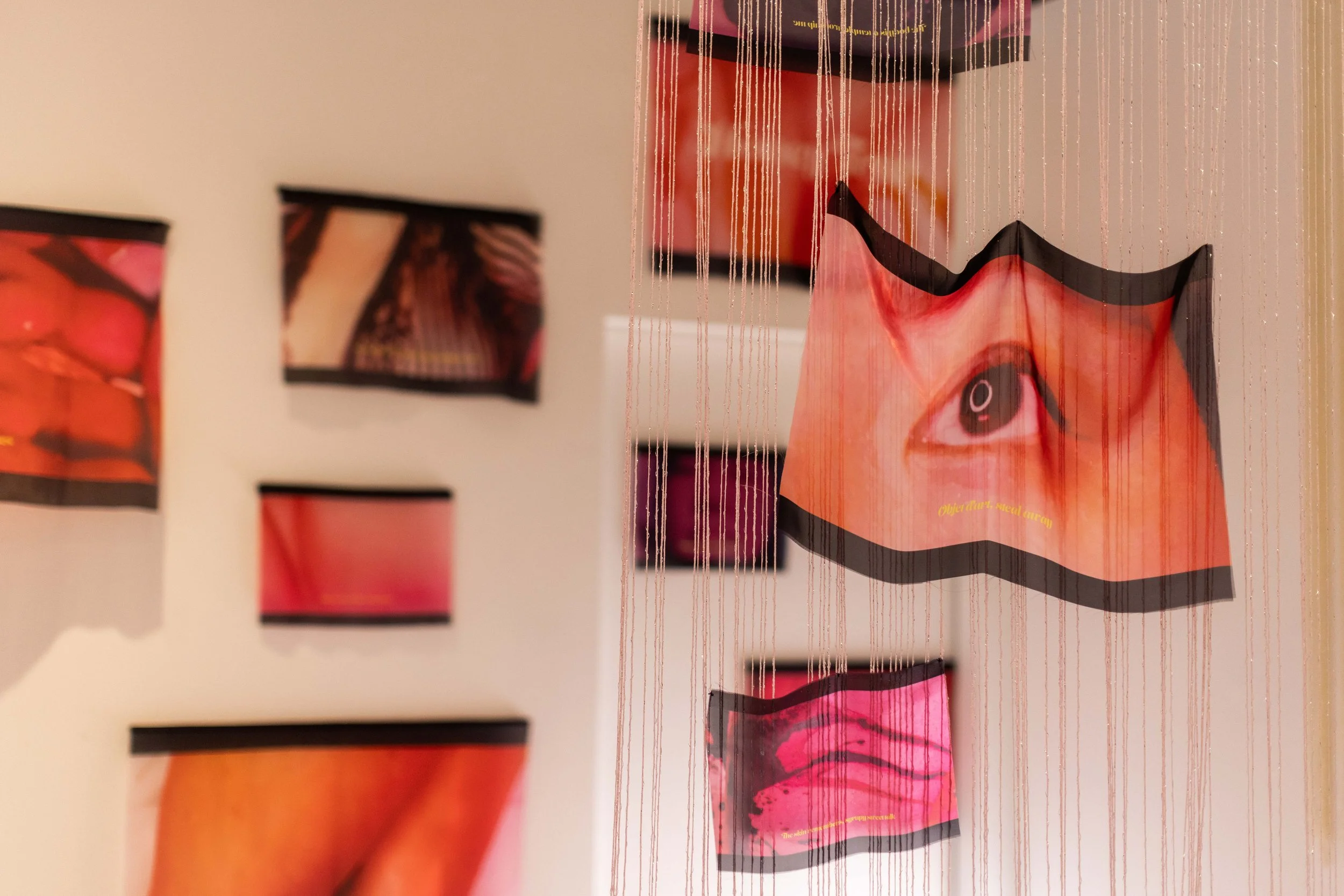
Building on her research into the original constructed archetypes, Lizzie was interested to look at the more ‘negative’ roles, namely the ‘Evil Woman,’ and the ‘Seductress’. Honey Trap, was born from her interest into the latter, and the role of the ‘femme fatale.’ She gathered vintage pornographic magazines, namely from Penthouse and Playboy, and read the articles and studied the images. She then extracted from the text the language used in speaking about seduction and desire, and rearranged these words and phrases to record as an audio to set imagery to. She was inspired by the fine line between the sleazy and the sensual, and used her own body as a landscape for desire to assume the role of the ‘Seductress’ in front of the camera. But, by also crafting the gestures and abstracted forms as the director behind the camera, she shot the video work in an isolated and intimate manner in order to subvert the typical male gaze of pornography. She lured viewers into a Honey Trap of dialogue about the empowerment of owning one’s sexuality, and retaining agency while still celebrating form, despite the fear of many Southeast Asian women in revealing their bodies to being overly sexualized, objectified, and scrutinized.
The Divine Feminine Silver Screen Oracle Deck (2024) - Artist Merchandise
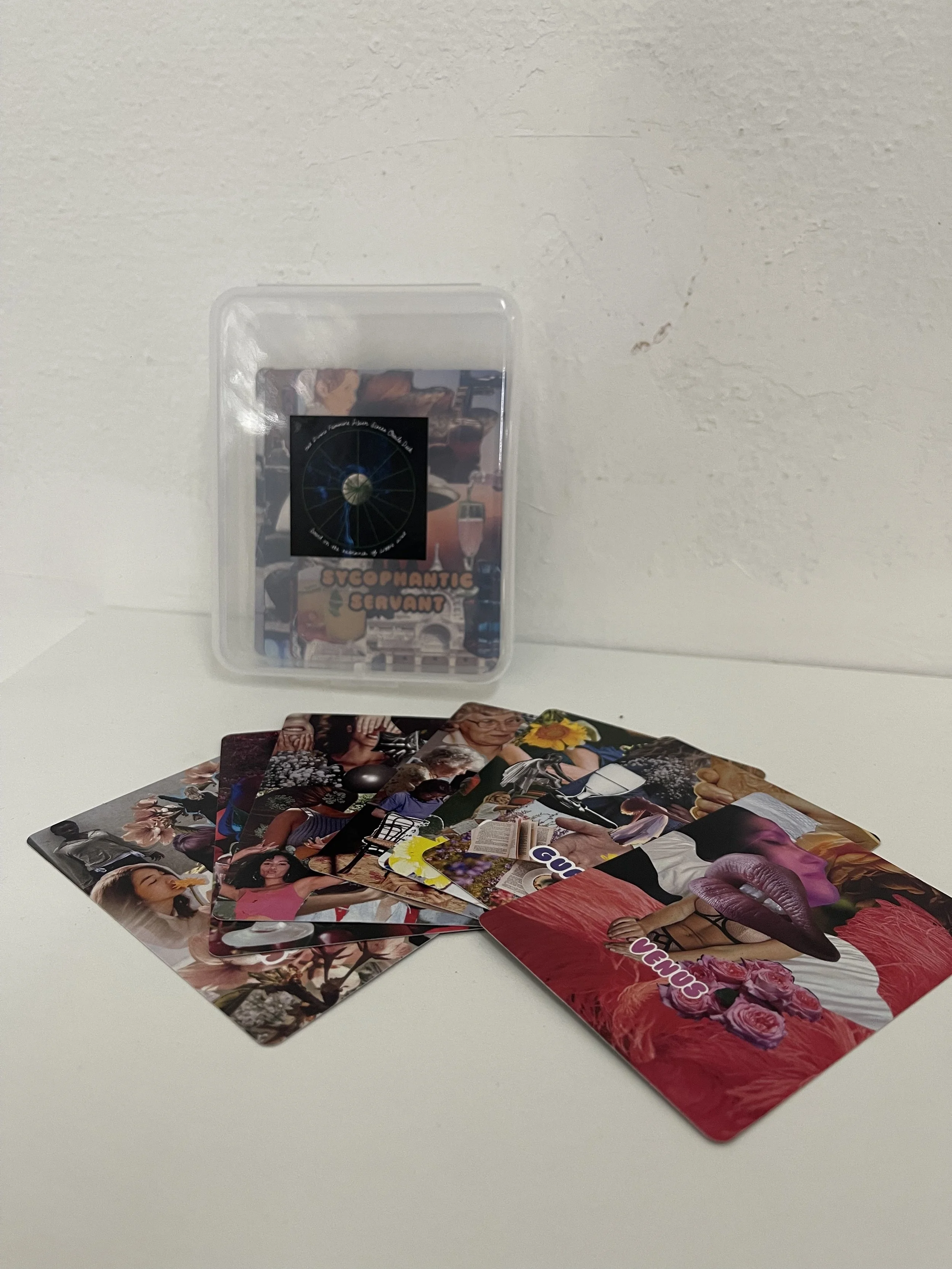
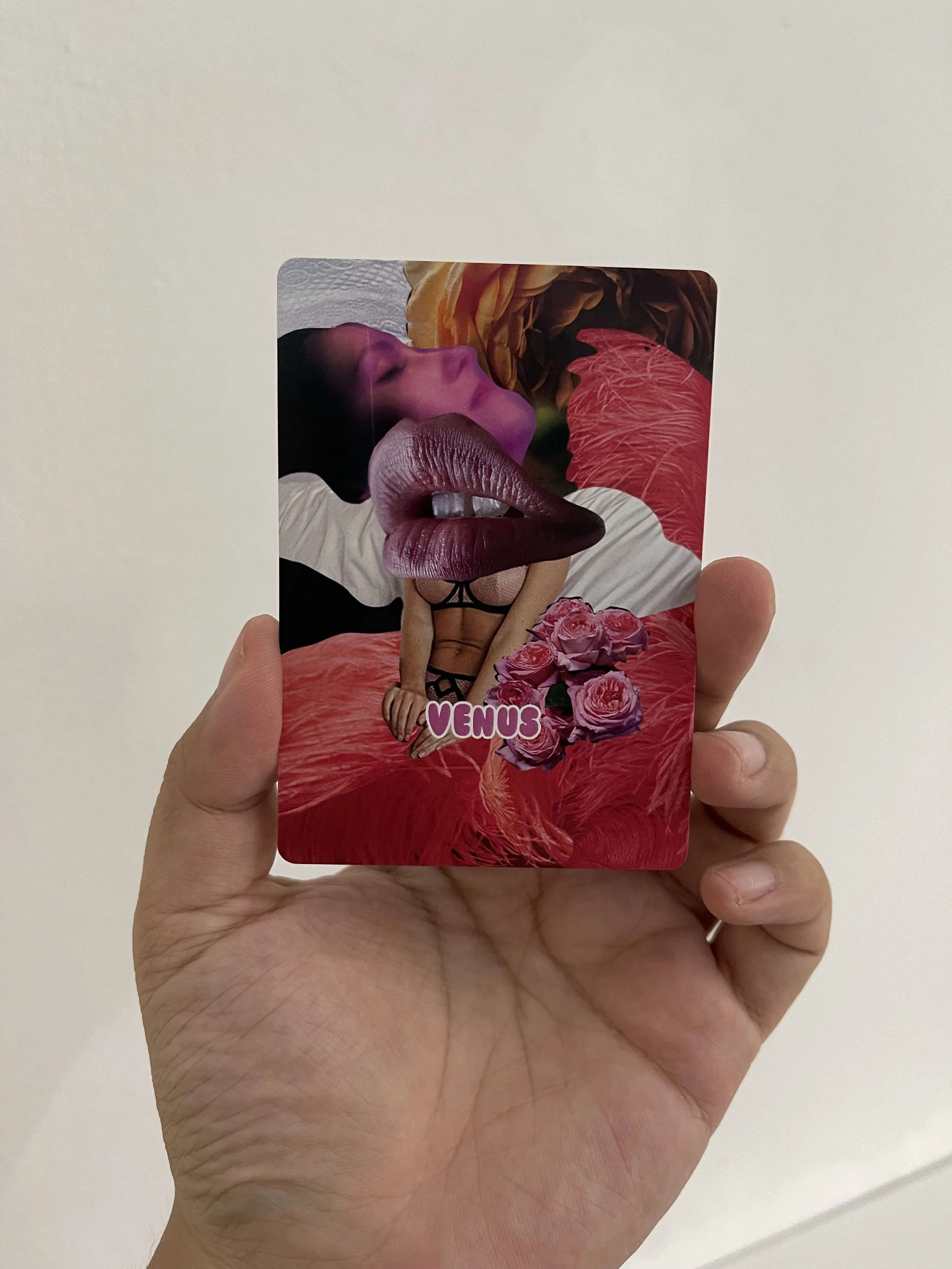
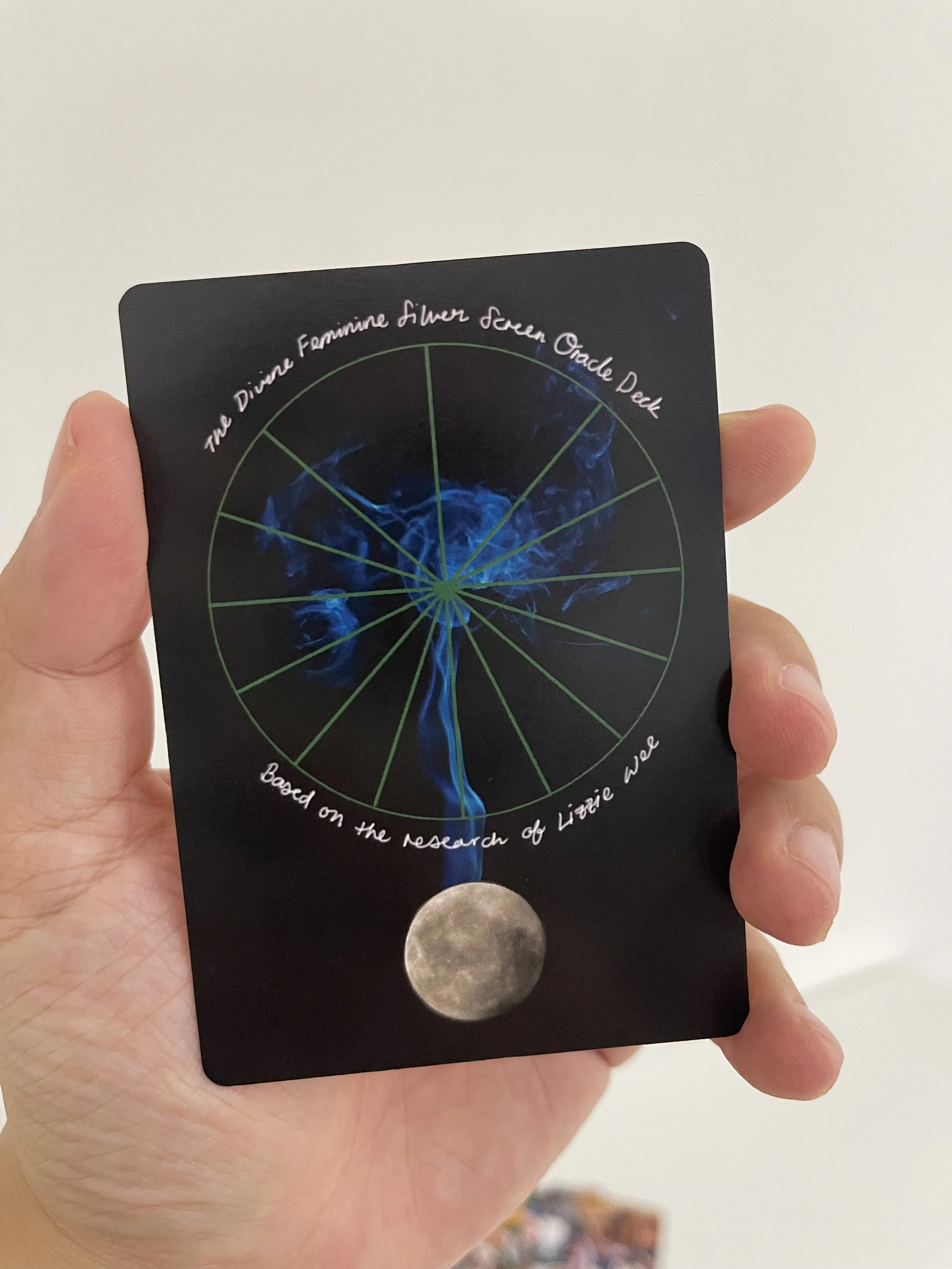
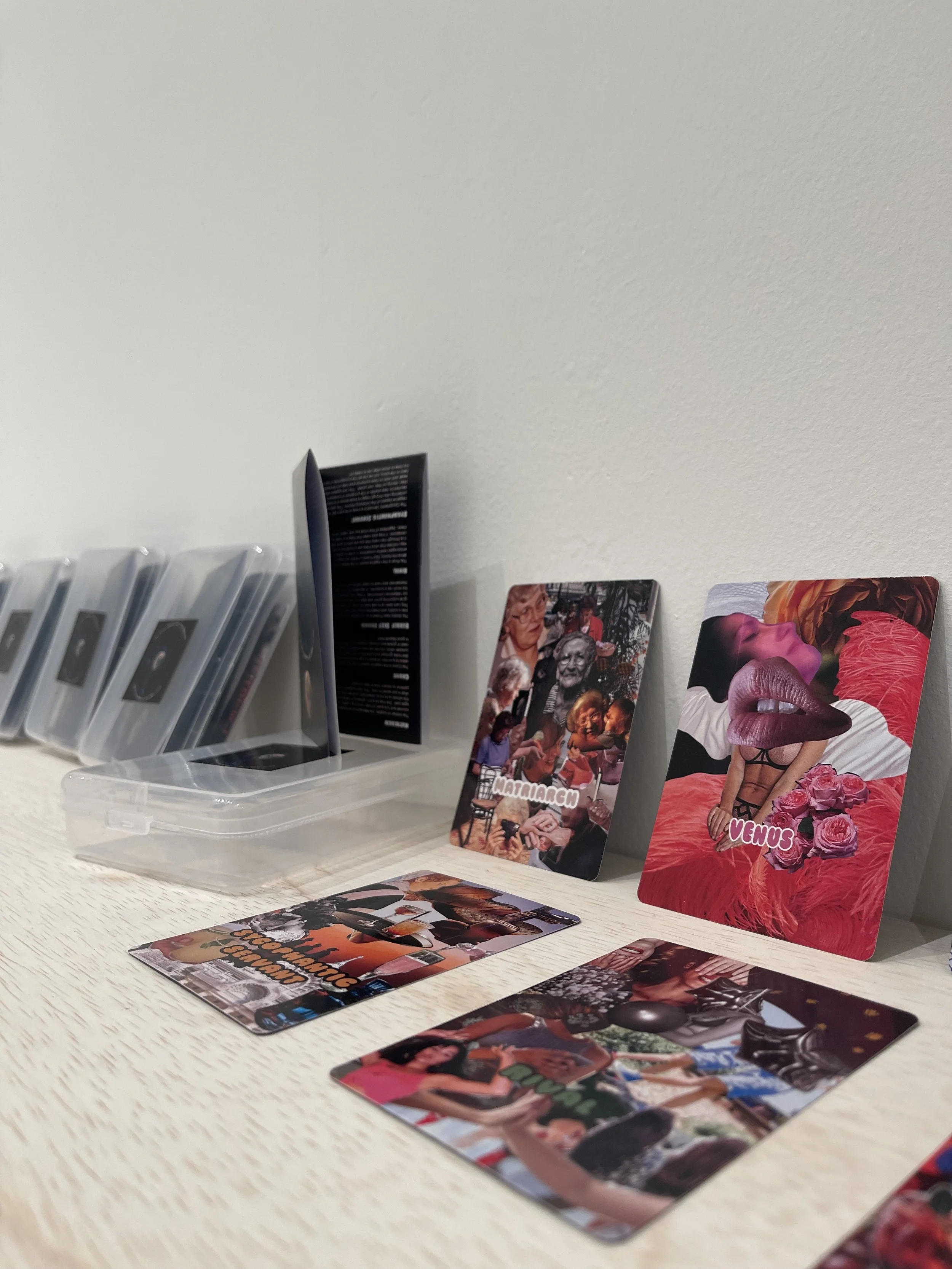
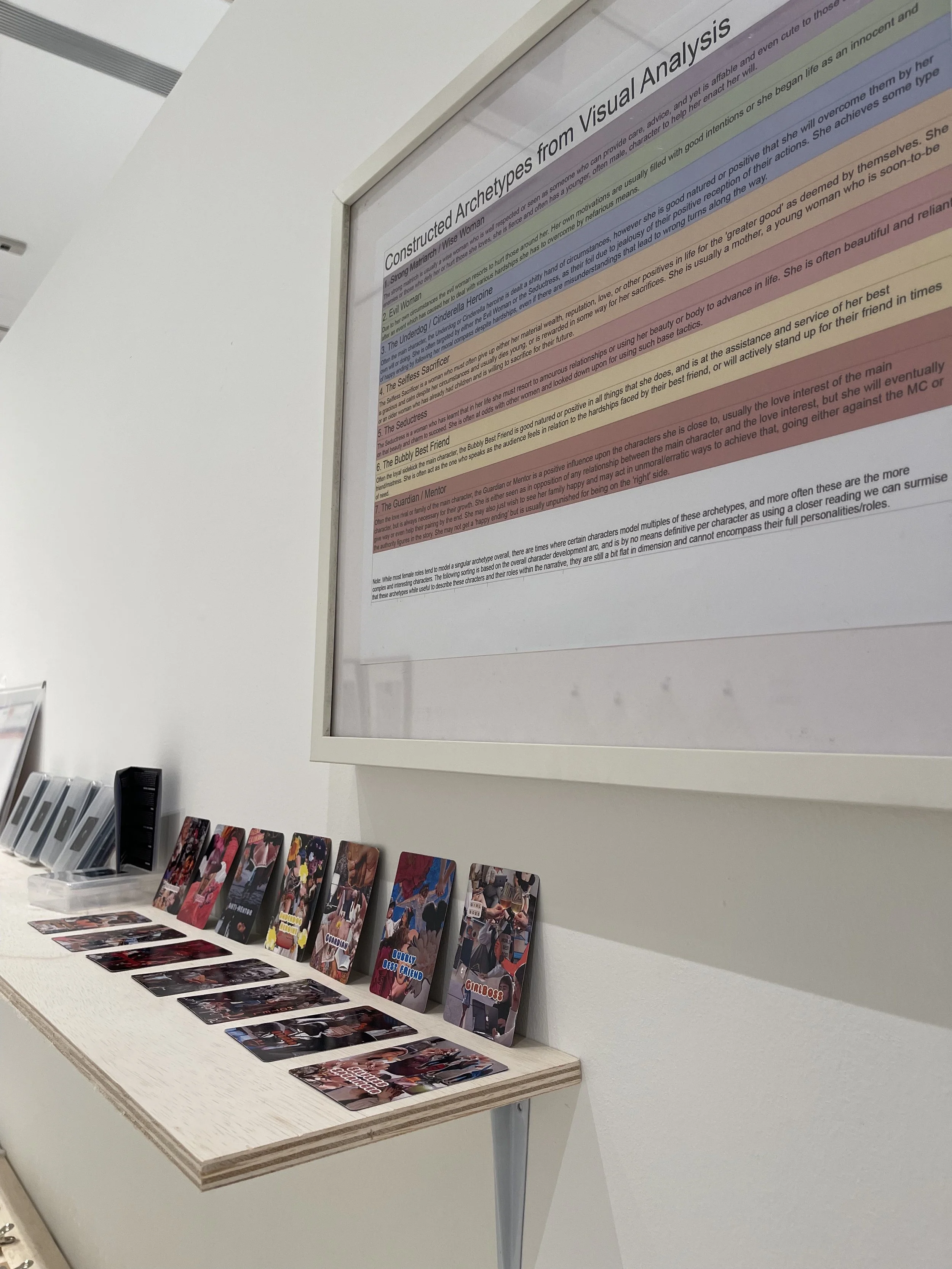
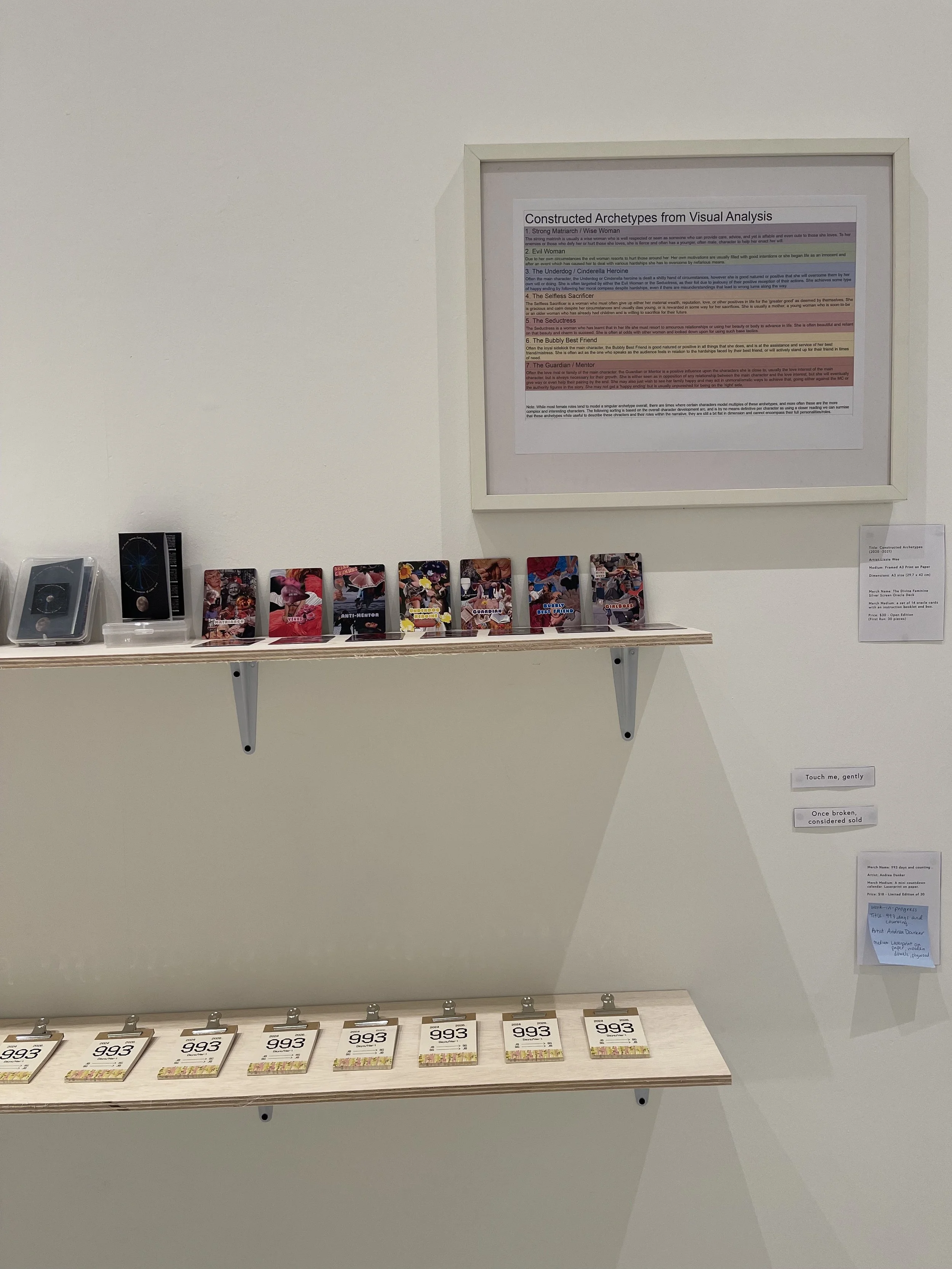
Part of the Collectible Experience (2024), The Divine Feminine Silver Screen Oracle Deck is a collection of oracle cards featuring original collages created to embody the sterotypical ‘vibes’ of the seven different female archetypes, in two styles. The 7 archetypes are made into 2 different readings: a more positive one and a negative, which is to show the skewed portrayals of similar archetypal characters, derived from the research into creating original female archetypes from Southeast and East Asian visual media. Exploring the aesthetics coded into these archetypes to make commentary on both the act of ‘commodifying’ that happens when creating a product that comes from an artwork, and the portrayal of women on the ‘silver screen’: the movies and television shows we consume. What is ironic is that this process is quite similar to the oversimplification of female characters in many forms of visual media, from which the archetypes were constructed from. In giving such a brief visual distillation in creating a deck of cards to divine answers or the future, using images derived from what was years of research, The Divine Feminine Silver Screen Oracle Deck is a tongue-in-cheek project that hints at questioning the ‘flatness’ of what already exists in our media landscape.